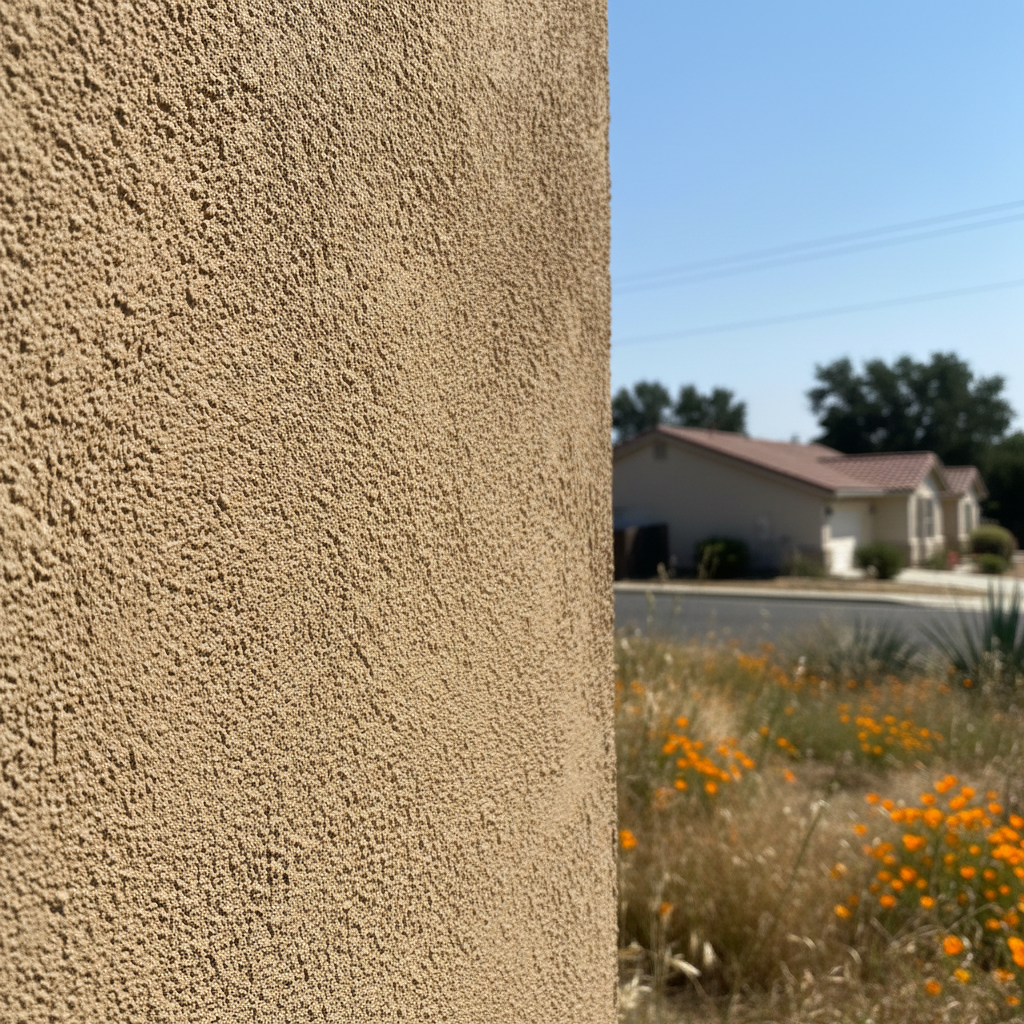
Stucco is tough, but it is not bulletproof. If you live around here, you already know our climate puts exterior walls through a lot of stress. Between the scorching summer days baking the east side of your house and our damp valley fog settling in during winter, your plaster takes a beating. Precision Stucco Turlock gets calls all the time from homeowners over near Monte Vista or down by Columbia Park who noticed a hairline crack and waited too long to address it. By the time they called, moisture had already gotten behind the scratch coat.
You do not need an engineering degree to spot early warning signs on your home. Most homeowners can handle a basic visual walkthrough twice a year. Before you grab a ladder, grab a notebook and walk the perimeter of your house on a bright, sunny morning. Low-angle light is very helpful for spotting surface irregularities.
What You Can Check Yourself
Start from the ground and look closely at the texture. You are hunting for spiderweb cracks, horizontal splitting, or any spot where the stucco looks like it is bulging outward. Pay special attention right beneath window sills and where your roofline meets the wall. Water loves to pool in those corners.
Check the bottom edge of your walls where the stucco meets the concrete foundation. There needs to be a clear gap, known as a weep screed, so trapped moisture can escape. If your landscaping mulch or flowerbeds have piled up against the wall and buried that gap, rake it back immediately. That one fix saves more walls than anything else Precision Stucco Turlock sees.
Tap gently on suspicious spots with the plastic handle of a screwdriver. A solid wall makes a crisp thud. A hollow, papery sound means the stucco has delaminated from the lath behind it. That is a red flag.
When to Put Down the Screwdriver and Call a Pro
Hairline cracks under an eighth of an inch happen on almost every house in Turlock as things settle. You can usually patch those with a quality elastomeric caulk or a matching acrylic patch kit if you are handy. But certain signs mean you need to step back and bring in somebody who does Stucco Repair in Turlock every day.
If a crack is wider than a nickel, or if you see brown, rust-colored streaks bleeding down the face of the wall, do not try to patch it yourself. Rust means the metal lath underneath has rusted through because water has been sitting inside your wall cavity for months. Precision Stucco Turlock regularly cuts out sections where homeowners tried to seal over rust stains, trapping active rot inside.
Bulging or soft spots are another area for professionals. That usually points to framing rot or a failed weather barrier behind the plaster. Slapping a coat of paint over a soft spot will not fix what is happening inside the stud bay.
After the Inspection
Once you finish your walkthrough, take pictures of anything that looks off so you can track whether it grows over the next few months. Fixing a small crack early costs very little. Rebuilding a corner where water got behind the scratch coat is a much bigger project. Keep up with your seasonal checks, keep your sprinklers from oversaturating the exterior walls, and Stucco Contractor services from Precision Stucco Turlock will help your home withstand the Turlock climate for many years.