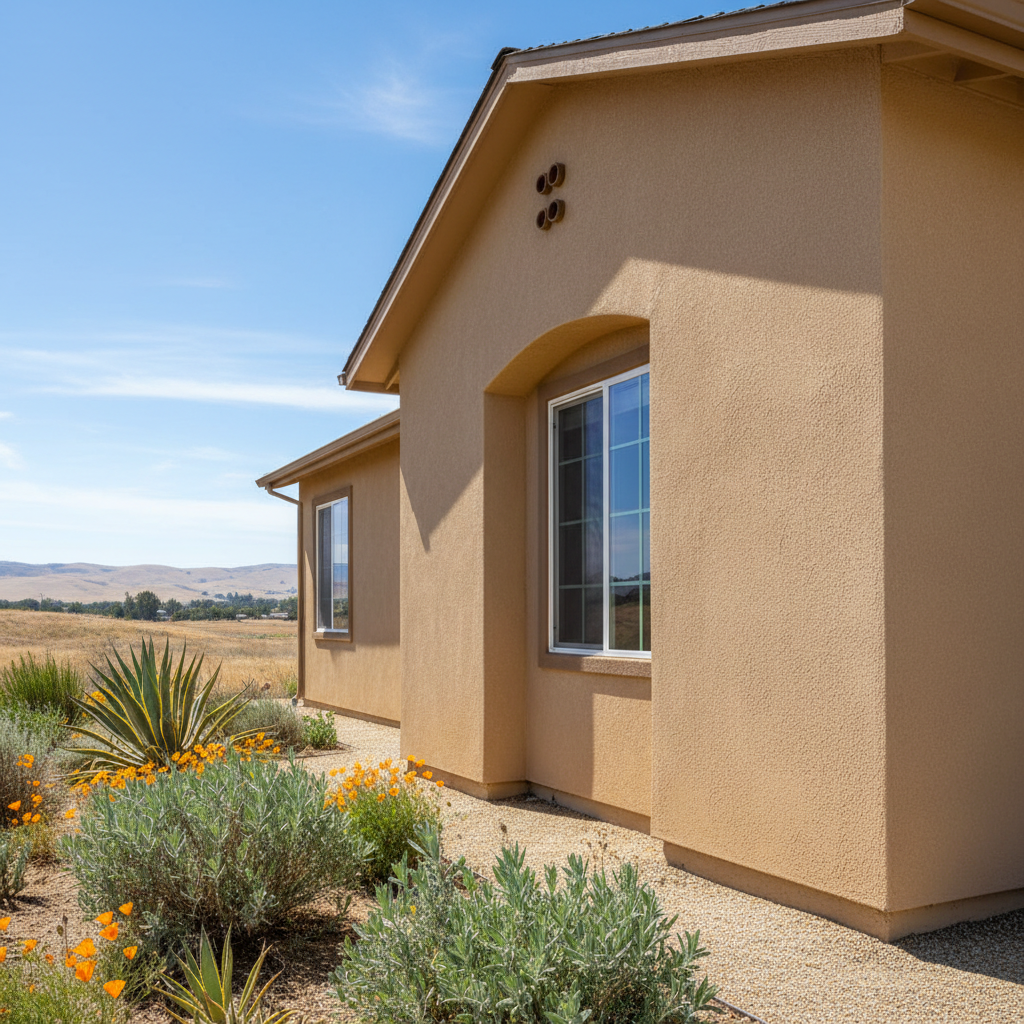
Alright, let's talk stucco. You've got it on your home here in Turlock, and that's a smart choice for our Central Valley weather. Stucco's tough, fire-resistant, and looks good, but it's not something you can just put up and forget about. Like anything else, it needs a little care to really last. I've been working with stucco in this area for years, so I've seen firsthand what works and what doesn't. Here’s what you need to know to keep your stucco strong and healthy.
Make Your Stucco Last Longer
You want your stucco to stick around for a while, right? A big part of that means stopping problems before they even start. Here in Turlock, we get some seriously hot summers—often over 100 degrees—followed by cooler, sometimes wet winters. This constant heating and cooling makes the stucco expand and shrink, which can lead to stress cracks, especially around windows and doors. Oh, and our expansive clay soils can shift, putting stress on foundations and, in turn, your stucco walls. What a pain!
- Watch your drainage: Water is stucco's arch-nemesis. Make sure your gutters are clean and push water away from your foundation. Double-check that sprinklers aren't constantly spraying your stucco walls. If water just sits against the stucco, it can cause all sorts of headaches.
- Seal up openings: Windows, doors, and utility pipes are common spots where water loves to sneak in. Make sure the caulk around these areas is in good shape. Over time, caulk dries out and cracks, creating little entry points for moisture. Re-caulking every few years is a small job, but it makes a huge difference.
- Smart landscaping: Don't let plants and shrubs grow right up against your stucco. They can trap moisture, block airflow, and even physically damage the surface. Give your stucco some breathing room, please.
- Maybe a fresh coat of paint: If your stucco is unpainted, it breathes naturally. If it's painted, using a good quality elastomeric or acrylic paint can add an extra layer of protection and help cover up tiny hairline cracks. Just be sure it's a breathable paint made for stucco.
Regular Upkeep: Things You Can Do
Routine checks and a little cleaning go a long way. Think of it like washing your car; you wouldn't let it go years without a scrub, would you? Your house exterior deserves the same kind of attention.
- Look it over once a year: Walk around your house at least once a year, maybe twice. Really look closely at all the stucco surfaces. Pay extra attention to spots around windows, doors, and at the bottom of the walls. This is often where problems first pop up. Snap some pictures if you see anything, so you can track if it gets worse.
- Clean it gently: Stucco's textured surface can trap dirt, dust, and even some mold or mildew, especially on north-facing walls that don't get much sun. You can clean it gently with a garden hose and a soft-bristled brush. For tougher spots, a mild detergent solution (like dish soap and water) can work wonders. Always rinse thoroughly from top to bottom.
- Pressure washing with care: Yes, you *can* pressure wash stucco, but you really have to be careful. Too much pressure can damage the surface. If you're going to use one, keep the pressure low (under 500 psi is a good rule of thumb for DIYers), use a wide spray nozzle, and stand a good distance back. Honestly, it's usually best to hire someone who knows what they're doing for this, or just stick to the hose.
Bad Signs to Watch For
Your stucco usually tells you when something's wrong. You just need to know what to look for. Catching these things early can save you a ton of money and hassle later on.
- Cracks: Hairline cracks are pretty normal and often just cosmetic, caused by regular settling or temperature changes. But if you see cracks wider than an eighth of an inch, or ones that run diagonally from window and door corners, those are bigger concerns. They could mean structural movement or let water get behind the stucco.
- Stains and odd colors: White, powdery salt deposits (we call that efflorescence) mean water is getting into the stucco and then drying on the surface. Dark streaks, especially below windows or other openings, are a huge red flag for water getting in.
- Bulging or soft spots: If parts of your stucco look like they're bubbling or pushing outwards, that's a sign the bond between the stucco and the wall underneath is failing. If you press on the stucco and it feels soft, spongy, or crumbles, you've got moisture damage and possibly rot underneath. That's serious business.
- Peeling paint: If paint on your stucco is blistering or peeling, it means moisture is trapped behind it.
When to Call a Pro
Look, some things you can handle yourself, but other times, you really need an expert. Don't be afraid to call someone like us at Precision Stucco Turlock if you see these issues:
- Any crack wider than a credit card: Small hairline cracks you might patch yourself, but anything significant needs a pro to figure out the cause and fix it right.
- Stains or efflorescence that keep coming back: If you're seeing white or dark stains that don't go away after cleaning, it means there's an ongoing water issue that needs to be found and stopped.
- Bulging, soft spots, or delamination: These are clear signs of moisture damage and possible structural problems behind the stucco. This isn't a DIY job; it requires a thorough check-up and proper repair to stop further damage.
- Damage around windows, doors, or rooflines: These are super important areas for managing water. If you think there are flashing issues or water getting in around these openings, you need a professional to make sure your home's exterior is sound.
- You're just not sure: If you see something that worries you and you're not sure if it's a big deal or not, it's always better to get a professional opinion. A small, inexpensive fix now can prevent a much larger, more costly repair later. We're here to help Turlock homeowners understand what's going on with their stucco.
Taking care of your stucco isn't just about curb appeal; it's about protecting your biggest investment. A little attention goes a long way in ensuring your Turlock home stays solid and beautiful for years to come.